
Look to the skies to deepen your faith!
For the final week of our Christian Spiritual Practices Challenge, you’re encouraged to look to the skies.
This week, St Augustine’s College of Theology Professor Charlotte Sleigh invites you to slow down and discover how watching your feathered friends can become a powerful spiritual practice.
‘Look at the birds of the air’
Have you ever wondered what species Jesus was thinking about when he invited his disciples to ‘look at the birds of the air’ (Matthew 6:26-7)?
Until recently, I confess I had always thought about those birds in a generic sort of way: a sermon illustration that didn’t need any special detail to make its point. Like many amateur bird watchers, I have blank spots in my knowledge, especially for the smaller species, which I classify as ‘little brown jobs’.
This week, it occurred to me that Jesus, knowing his Father had created each species and declared it very good, was looking more carefully than I had previously imagined.
What bird might Jesus have been looking at?
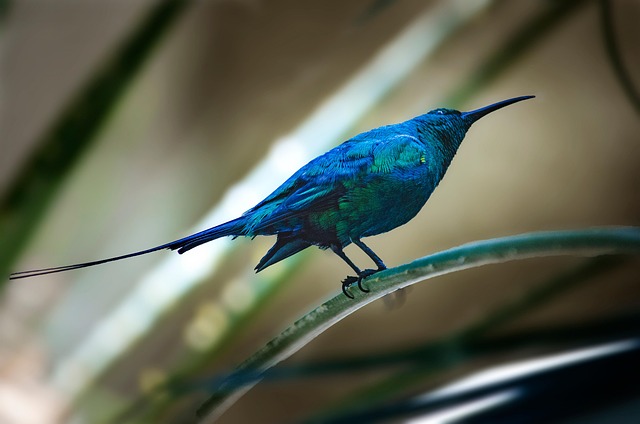
A quick dive into Wikipedia revealed many bird species in modern-day Israel-Palestine, but the one that caught my attention was the Palestine sunbird.
It’s about the size of a starling and similar in appearance, except the upper half of the male’s body is a super-glossy, blue-green burst of colour. It must make a dazzling sight flying in the sunshine, uttering its high and jingling song.
The sunbird’s curved beak hides a long tongue with a brush-shaped tip, perfectly evolved to lick nectar from inside flowers. No seeds to reap or store for the sunbird, just as Jesus said. Its Latin name, given when it was ‘discovered’ by Europeans in the mid-nineteenth century, is Cinnyris osea: the holy bird.
Lifting our eyes from our worries
I can imagine Jesus interrupting his own sermon and pointing up to the sky: Wow! Look at them! Aren’t they beautiful? My Father made them!
Making a habit of looking up to see what birds are around literally lifts our eyes from the worries that bog us down, just like Jesus said. And you might be surprised by what you see.
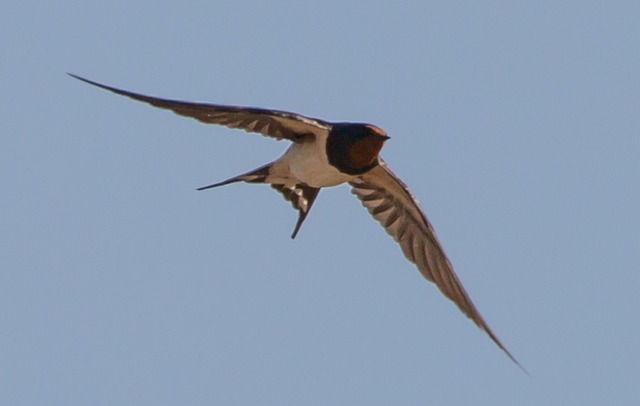
In Canterbury, where I live, you might be lucky enough to catch a glimpse of the fastest living creature on the planet, the peregrine falcon. You might see pigeons twisting their scissored wings against the wind. You might see starlings swirling like flecks of the oncoming night, gathering themselves into a treetop compline.
In our poor, battered world, paying close attention to the species surrounding us is a spiritual gift. It develops our joy in God’s creation, a joy that can, in turn, fuel our love and care.
We will never know what species Jesus was pointing out when he told his disciples not to get paralysed by worry. But we can take his example as inspiration to look closely at the real birds and other species surrounding us.
Why not look out for a starling today?
Watch our Spirituality and Discipleship Taster Term lecture
If you’ve enjoyed the Spiritual Practices Challenge, watch this short video featuring our Principal, Alan Gregory.
In just 20 minutes, Alan talks about why regular spiritual practice is important and why it’s essential for anyone who wants to grow in faith.
Ready to sign up for our Spirituality and Discipleship Taster Term?
If these weekly practices have sparked something in you – excitement, maybe curiosity – you’re not alone. Our Spirituality and Discipleship taster term is a gentle way to start theological study without a long-term commitment.
The taster term at St Augustine’s College of Theology is:
-Part-time
-10 weeks long
-Running from March to June 2026
-Designed to fit around work or family life
You can choose the study option that suits you best:
- London: Weekly evening classes (Mondays, 6:30 pm – 9:00 pm) at our campus near London Bridge.
- Kent: Fortnightly teaching days (Fridays, 10:30 am – 4:00 pm) at our West Malling campus
- Online: Weekly evening classes (Wednesdays, 6:30 pm – 9:00 pm)