

Join a 10-month language course
Have you ever wondered whether something gets lost in translation when you read the Bible?
The New Testament was written in Koine Greek (most people call it New Testament Greek), the everyday common language of the Mediterranean world in the first century. Our modern translations are excellent, but when you study the original language, things you’ve read can look dramatically different.
At St Augustine’s College of Theology, our New Testament Greek courses are flexible and accessible, teaching you to read the Bible as it was originally written.
Why is New Testament Greek such a fascinating language?
To understand why New Testament Greek is so interesting, it helps to know something about how the text has come down to us.
One of the oldest surviving manuscripts of the Bible is the Codex Sinaiticus. It’s a handwritten book dating from around 330-360 CE, written on parchment and now held mostly in the British Library.
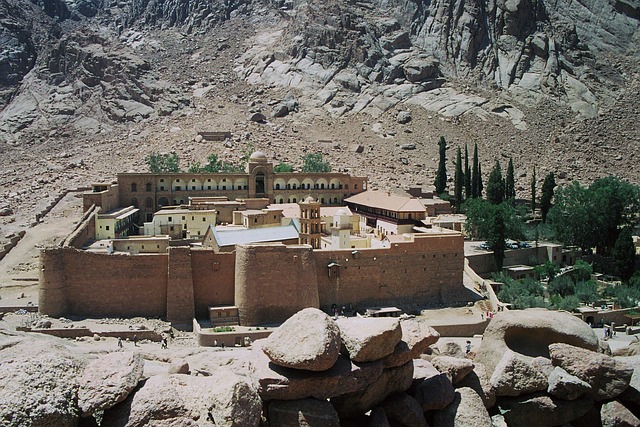
Originally, it contained the entire Old and New Testaments, though only around half of the Old Testament pages survive today. The Codex Sinaiticus was brought to the attention of the wider world by the German biblical scholar Constantin von Tischendorf, who found it at St Catherine’s Monastery in Sinai in 1844. It gives us one of our closest surviving connections to the earliest Christian scriptures.
What does New Testament Greek look like?
When you see it for the first time, it looks unlike anything you’d expect.
The text runs as one continuous stream of large capital letters, with no spaces between words, no punctuation, and no accent marks. Scribes even used shorthand abbreviations for sacred words like God, Lord, and Jesus.
The text might sound inaccessible, but it’s one of the things that makes studying New Testament Greek so absorbing. The Codex Sinaiticus is one of four major early manuscripts, known as Uncial texts, that scholars use when studying the New Testament in its original form. Every English translation you’ve read comes from a Greek text that has its own character and detail.
Study New Testament Greek in London or online
St Augustine’s offers two levels, elementary and intermediate, so you can start with no previous knowledge and build from there. You can study at our London Bridge campus in Southwark, entirely online via Zoom, or a combination of both – whichever works best for you.
On the elementary course, you’ll develop a grounding in the language and get to grips with the basic tools of translation. By the end of the first year, you’ll have translated smaller parts of the New Testament directly from Greek.
If you decide to enrol on the intermediate course, you’ll work through an introductory textbook and translate at least a full chapter of the New Testament from Greek, which is an exciting milestone to reach.
Is the New Testament Greek language course for you?
You don’t need any previous experience of Greek or biblical languages to start. Whether you’re a lay minister, ordinand, or someone who wants to read scripture more closely, this course gives you skills you’ll use for the rest of your ministry and your life.
Start in September 2026
The New Testament Greek course starts in September 2026 and costs £900. If you’d like to find out more or apply, visit the New Testament Greek page on our website.